The Collosseo The Coliseum (Collosseo in the original Italian) is undoubtedly one of the most famous buildings of Rome, welcoming thousands of visitors. Its construction started in 70 AD under the rule of Emperor Vespasian, but it was his successor, Emperor Titus who saw the Coliseum being finished in the year of 80 AD. This elliptical amphitheater in the center of the city of Rome was the largest amphitheater in the Roman Empire and is considered one of the greatest works of Roman Engineering and Architecture. Historians estimate that the building could hold capacity to 50.000 people which was quite a massive number back in those days.
Since this is one of the most visited monuments of Rome, it’s inevitable that queues will be formed, a solution to going faster through this queues is to pre-order your ticket before your visit.
The Vatican The Vatican city is a sovereign city-state whose territory consists of 44 hectares within the city of Rome, this makes it one of the smallest internationally recognized independent states in the world. This city is the physical center of Roman Catholic faith and therefor the Pope is simultaneously the head of State and Government as well as the Religious leader of the Catholic community. There are several interesting sites to be seen inside the Vatican, from historical churches to art museums. We recommend the Pinacoteca (housing the private art collections owned by the previous Popes since Pius VI), Raphael’s Room’s (This rooms were actually the privet apartments of Pope Julius II who commended Raphael’s work by assigning him the decoration of the fresco walls) and the Sistine Chapel (named after his commissioner Pope Sixtus IV, it’s one of the most famous buildings in Vatican City).
Bocca della verità The Bocca della verità (or the “Mouth of truth” in english) is a circular sculpture made out of pavonezzo marble representing a human male face with an open mouth. Today the sculpture can be found on the portico of the Basilica of Santa Maria in Cosmedin (located at Via della Greca, 4), but it’s believed that it was once part of a fountain or a drain cover from Roman times and that the male figure is a representation Neptune or some other water related deity. A legend dating from the Middle Ages states that the “Mouth of truth” will bite anyone who dares to lie while having his hand placed inside the statue’s mouth. Over the centuries the fame of being a magical lie detector has grown and the statue attracted several curious visitors who wanted to test this legend. In 1953 Hollywood immortalized it the movie “Roman Holiday” staring Audrey Hepburn and Gregory Peck.
The Trevi Fountain The Trevi Fountain is possibly the most famous fountain in Rome. It is located at the Piazza di Trevi and was named after this same piazza. The construction of the fountain was commissioned to the artist Nicola Salvi by pope Clement XII and its construction started on the year of 1732, although it was only finished in 1762 by Giuseppe Pannini. The structure is often mentioned as a fine example of late Rococo/Baroque sculpture: In the center of the fountain stands a figure of Oceanus (Titan the Roman Pantheon, Oceanus was the divinity that ruled over the mythic river Okeanos, that was once believed to encircle the earth and was the font of all the Earth's fresh-water) by his right side on a niche flanking Oceanus stands female allegory of abundance, holding a cornucopia filled with the harvest. On Oceanus left side stands another female figure representing salubrity, with a snake drinking from the cup that she holds. It is common belief that a visitor that throws a coin at the Trevi Fountain will be sure to return to Rome one day.
Rome Nightlife Rome offers a varied and colorful nightlife offer that lasts until very late in the night - or very early in the morning, depending on your point of view. Such diverse offer is fueled by the local habit of meeting friends out of the house during the nighttime and supported by the excellent weather that Rome enjoys most of the year. We recommend you take a walk to the Testaccio area, located in the midst of Via Marmorata, a very popular nightlife spot among tourists and locals alike, where streets are full of people strolling around the restaurants, bars and clubs until the very first hours of the morning. Another popular nightlife area is the San Lorenzo where you will find a lively district with a bohemian fell upon it: less touristic but with many galleries, art studios of local artists, bars and pubs to be visited. For those seeking a different experience in Rome we suggest a ride in the Tramjazz, a restored 1947 Tram that was transformed into a mobile restaurant with live Jazz music. The dinner promises to be a culinary experience prepared by the chef of the restaurant Pallatium with local and seasonal ingredients. The music which have theme nights dedicated to specific genres and artists.
|
| 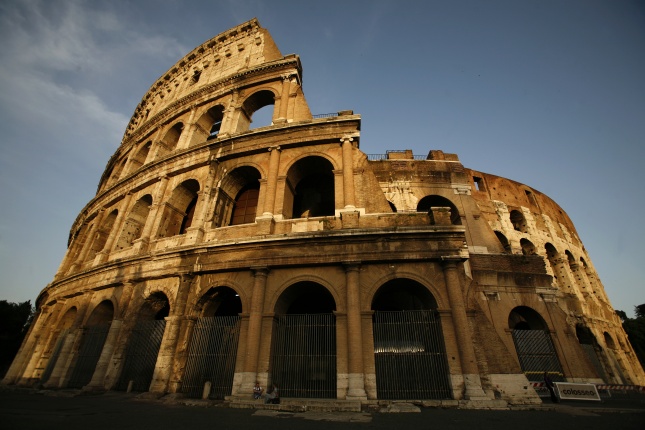
The Coliseum of Rome
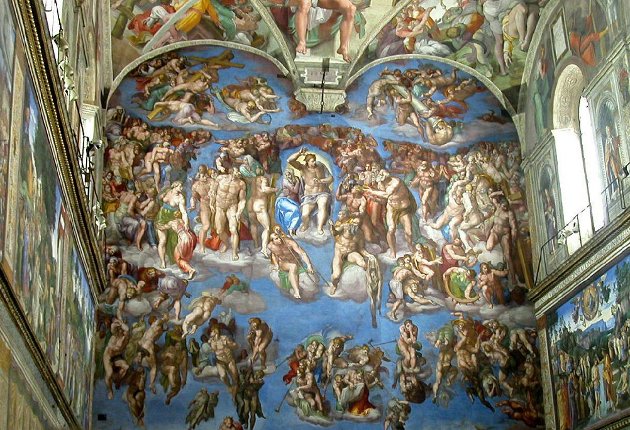
A Fresco inside the Sistine Chapel
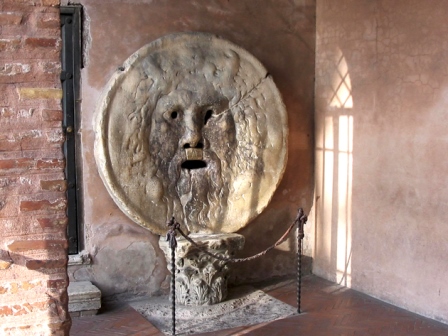
Bocca della verità
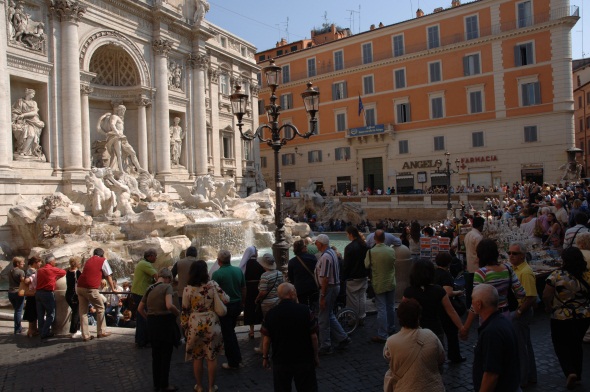
Tourists admiring the Trevi Fontain
Rome by night |